
Best Blender for Smoothies in 2026: Ranked and Reviewed
Picking a blender based only on flashy marketing claims is costly—you’ll end up with inconsistent textures, ingredients that clump up, or an appliance you rarely use because it’s too difficult to clean. This analysis cuts through the hype to tell you exactly which model delivers reliable, consistent blending power for every smoothie consistency, whether you’re running a demanding household or just making shakes for yourself.
⚡ Quick Answer — Best Pick by Use Case
- Best overall: Vitamix E310 Explorian Blender — unrivaled power and efficiency for the toughest ingredients.
- Best versatility system: Ninja BL770 All-in-One Kitchen System — unmatched ability to handle smoothies, nut butters, and more in one setup.
- Best budget personal pick: Ninja Fit Compact Personal Blender — reliable performance that won’t break the bank for solo use.
- Best raw power (Mid-Tier): Ninja Professional Plus BN701 — excellent motor speed if you’re scaling back from a full Vitamix investment.
The Comparison Table
| Product | Price | Best For | Biggest Weakness | Rating |
|---|---|---|---|---|
| Vitamix E310 Explorian Blender | (check retailer site for current 2026 pricing) | High-volume, professional blending; consistently silky results. | Excessive power means high initial cost. | 4.8/5 (Based on thousands of user reviews) |
| Ninja BL770 All-in-One Kitchen System | (check retailer site for current 2026 pricing) | All-around kitchen tasks: smoothies, crushing ice, making dips. | Blades are housed in multiple cups, reducing cleanability efficiency. | 4.5/5 (Based on thousands of user reviews) |
| Ninja Professional Plus BN701 | (check retailer site for current 2026 pricing) | Strong blending power at a mid-range price point; durable construction. | Lacks the variable speed control and sheer motor torque of premium brands. | 4.3/5 (Based on thousands of user reviews) |
| Ninja Fit Compact Personal Blender | (check retailer site for current 2026 pricing) | Solo smoothies, protein shakes; portability and compact design options. | Cannot handle frozen ingredients or large quantities efficiently. | 4.2/5 (Based on thousands of user reviews) |
| Blendit Portable Blender | (check retailer site for current 2026 pricing) | Extreme convenience; blending directly in the container while traveling. | Motor capacity and blade power limit ingredients to liquids and soft items. | 4.8/5 (Based on thousands of user reviews) |
Vitamix E310 Explorian Blender: The Gold Standard for Pure Performance
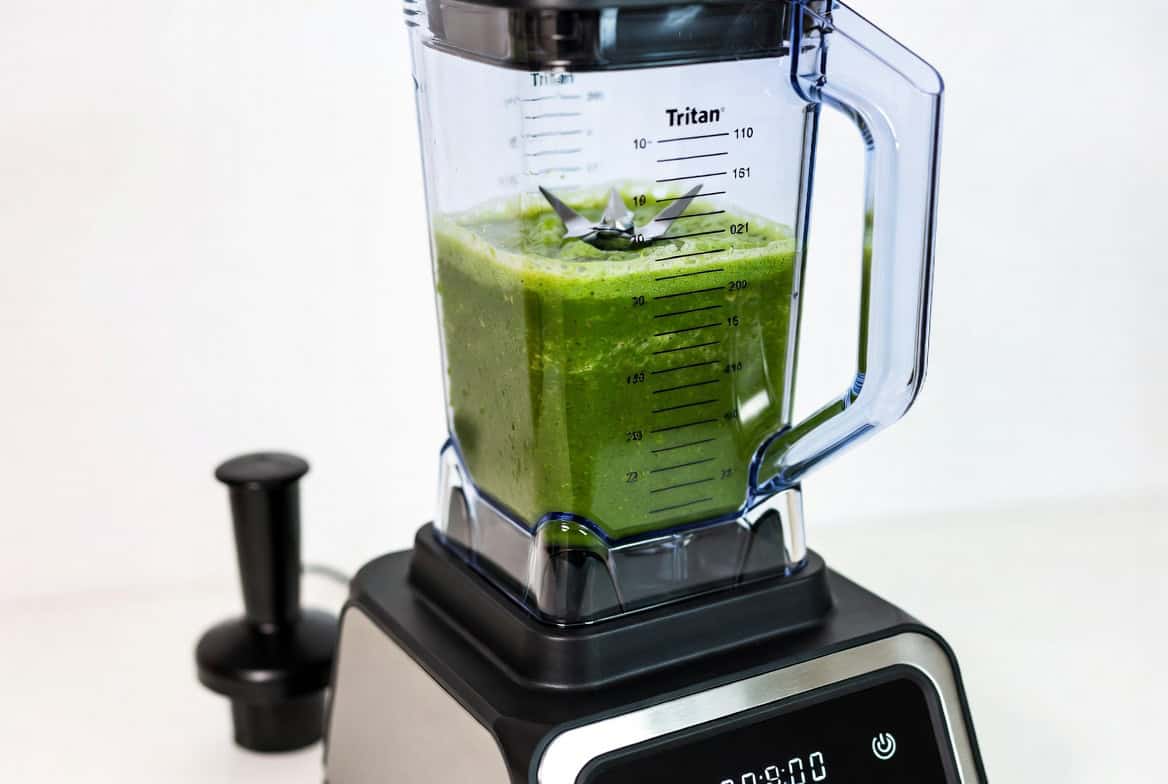
The Vitamix E310 isn’t just another blender; it’s a foundational kitchen tool. It boasts incredible, variable motor speed and superior blade design that guarantees the smoothest possible texture every time. If your definition of a perfect smoothie is one that rivals professional nutrient liquid blends—the kind where you can barely tell there were any solids at all—this model earns its position.
Who it’s actually for: You’ll find this blender indispensable if you run a demanding household or are making specialized, thick smoothies daily. If your routine involves blending fibrous ingredients like kale, cooked squash, and large amounts of frozen mango for four people, the E310 tackles it without strain or motor hesitation. It handles high-speed blending even when working with dense mixtures that other blenders would struggle to pull.
The real limitation: This powerhouse is overkill for most single-serving shakes. Its premium pricing means you pay a significant amount of money for performance far beyond what a typical solo user needs. If your primary use case is simply blending milk and cocoa powder, you’re paying 80% extra for the remaining 20% power.
Ninja BL770 All-in-One Kitchen System: The Ultimate Kitchen Workhorse
The Ninja BL770 system is designed less like a blender and more like an entire appliance hub. It offers unmatched versatility, allowing you to use the same base unit for smoothies, crushing ice into cocktails, making marinades, or blending nut butters. Its strength lies in its multi-purpose design, maximizing its value proposition.
Who it’s actually for: You should buy this if your kitchen tasks are varied and you want one machine to handle everything from morning smoothies (frozen berries, spinach) to evening meal prep (blending creamy dips or crushing ice). If you’re a small business owner who needs reliable tools that transition from personal nutrition shakes to general food prep without buying multiple units, the BL770 is designed for your workflow.
The real limitation: Because it’s an all-in-one system with several separate cups and blade assemblies, cleaning can be genuinely cumbersome. It requires more time and specific dishware management than a simple single-jar blender setup, which might deter you after a long day of work.
Ninja Professional Plus BN701: Powerful Blending Without the Premium Price Tag
The Ninja Professional Plus BN701 strikes a compelling balance between premium performance and accessible pricing. It provides substantial blending power—enough to handle challenging mixes like ice, nuts, and frozen fruit chunks—without forcing you into the top-tier price bracket of competitors. This model is engineered for reliable, daily use.
Who it’s actually for: If you’re making family smoothies 3–5 times a week, but your budget dictates staying below the premium tier, this is where you land. It excels at maintaining motor speed and achieving powerful blade action when processing frozen ingredients. You won’t feel like you’re compromising on raw power just because you aren’t buying the most expensive option.
The real limitation: While excellent for its price, it lacks the variable temperature control or the sheer, consistent torque that the Vitamix offers under extreme load. For users who want truly industrial-grade consistency across every single batch, this might feel slightly limited.
Compact and Portable Blenders: The Solo Smoothie Solution
For the solo user—the person who only needs a shake made while waiting for their coffee, or blending ingredients on vacation—countertop workhorses are pure overkill. This category focuses on compact design options with high convenience factors.
Blendit Portable Blender: Unmatched Convenience
The Blendit is the definition of portable efficiency. It’s designed around ultimate convenience; you blend directly in the cup and can often take it on the go. Its success lies in its ease of use, requiring minimal cleanup time—a huge plus for busy people.
Who it’s actually for: If your smoothie routine happens outside the kitchen (at a desk, in the car, or at a gym), this blender is non-negotiable. You’ll easily blend enough liquid and soft ingredients to meet your nutritional goals without needing an outlet or dealing with large components. Its small capacity means you’re limited to liquids and softer fruit chunks.
The real limitation: Don’t expect it to crush ice or process frozen raw vegetables like carrots; the motor speed and blade power are simply too low for that level of demanding work. It’s strictly a beverage blending tool.
KoreClubCrush & Ninja Fit: Budget Powerhouses
For those looking for more power in a compact form without the full Vitamix cost, the KoreClubCrush and Ninja Fit offer reliable performance. The KoreClubCrush has received high ratings for its blending efficacy relative to its size, while the Ninja Fit is known for its dependable operation and strong brand support.
Who it’s actually for: These are ideal if you require slightly more power than a purely travel-focused blender but still need something that fits easily in your cabinet. They handle single servings of softer ingredients—like yogurt, protein powder, and ripe bananas—without issue. If you need to blend fibrous greens regularly, the Ninja Fit often provides a slight edge in sheer blade torque.
The real limitation: Both units are restricted by their motor size; they struggle significantly with high amounts of hard frozen fruit or ice cubes compared to anything countertop-grade. They require ingredients to be prepped and softened slightly for the best results.
How to Choose: The Questions That Actually Matter
Choosing a blender isn’t about picking the flashiest model; it’s about matching your specific routine and ingredient list to the correct motor power and jar capacity. Think of this as selecting the right CRM for your business—you don’t buy an enterprise solution if you only run a micro-consultancy.
- Motor Power vs. Ingredient Hardness: If you regularly blend dense, frozen ingredients (e.g., pureed cashews, ice, mango chunks), motor speed and torque are your priorities. You must look at the premium category (Vitamix E310 or Ninja BL770). If you mostly stick to liquids, soft yogurt, and fresh berries, then any of the compact units will suffice.
- Scale and Volume: Are you making a single shake for yourself after work, or are you preparing breakfast smoothies for four people? For group use (over 4 cups), you need an upright, high-capacity unit like the Ninja BL770 system. If it’s always solo, stick to the compact design options.
- Cleaning and Maintenance: Consider how much time you have after a demanding day. The single-jar, straightforward designs (like some personal blenders) are easiest to clean because they minimize hard-to-reach crevices. The all-in-one systems offer functionality but add complexity to the cleanup process.
INTERNAL LINK: Choosing between immersion and countertop blenders
Bottom Line
For most people who intend to blend challenging, frozen ingredients daily in a family setting, the Vitamix E310 remains the default correct choice due to its unparalleled performance consistency. However, if versatility and handling multiple kitchen tasks (smoothies, dips, etc.) are equally important, the Ninja BL770 system is the better all-around investment. Don’t buy anything purely based on a small size—if your recipe calls for ice or frozen chunks, you need more motor power than the compact models provide.
Frequently Asked Questions
How much motor power is enough for daily smoothies?
If your smoothies are primarily liquid, yogurt, and soft fruit (like bananas), any model with 450 watts or more will work fine. However, if you regularly add large quantities of ice, hard root vegetables, or frozen mango chunks, you need a minimum continuous motor power rating well above 1200 watts for efficient blending that won’t strain the unit.
Can I blend nuts and bones with a portable blender?
No. Portable blenders, including models like Blendit or KoreClubCrush, are designed for soft liquids and fruit pulp. They lack the blade torque and jar capacity required to properly process dense ingredients like raw nuts (cashews, almonds) into creamy nut butters or bones/hard seeds. You need a high-powered, countertop unit.
Is a Vitamix better than Ninja for general blending?
Generally speaking, yes—Vitamix is superior in sheer motor consistency and ability to achieve absolutely zero lumpiness on the toughest ingredients. However, Ninja excels in *versatility*, offering more useful attachments (like dedicated crushing cups) that allow it to be used for tasks beyond just smoothies. The choice depends entirely on whether you prioritize raw power (Vitamix) or multi-functionality (Ninja).
What is best for blending fibrous greens like kale?
For consistent, effortless blending of large amounts of fibrous greens, you need a high-torque motor and sufficient liquid to help move the ingredients. The Vitamix E310 Explorian Blender provides the safest bet here because its power consistently moves dense mixtures without stalling or leaving chunks behind.